Wiki · Arcology history · Prototypes
Wiki Arcology history · Prototypes
Built experiments
Earth sites that came close, failed in public, or are only cousins. None of them are Concordia.
Prototypes and analogs
This page is Earth history for 2490 Museum / Zoggoling readers. Concordia is not Arcosanti. Analog stations are useful cousins for isolation and life-support — not definitions of an arcology.
Arcosanti
Arcosanti is an experimental town in Arizona, begun in 1970 as a working test of Soleri’s compact, pedestrian urbanism. It remained small. It never housed the city-scale population the 1969 drawings implied. That gap is part of the public record, not a failure Concordia is required to avenge.
Photograph the built apses and foundry via Carol M. Highsmith’s Library of Congress work (no known restrictions). Do not paste Soleri concept drawings from Cosanti publications.
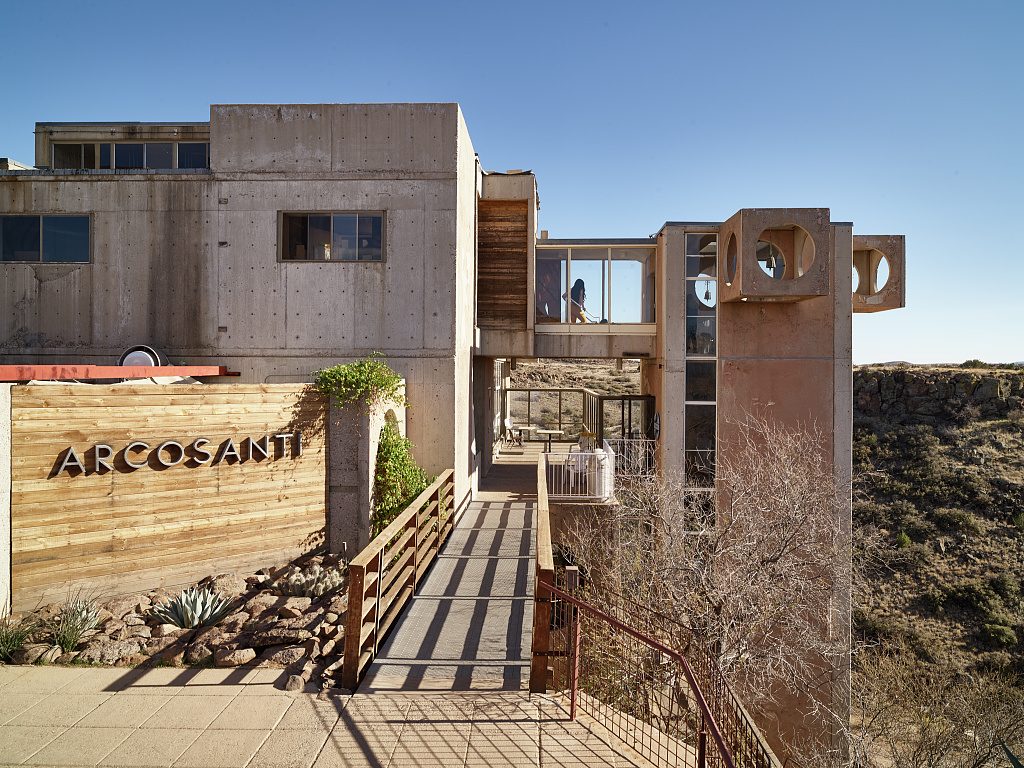
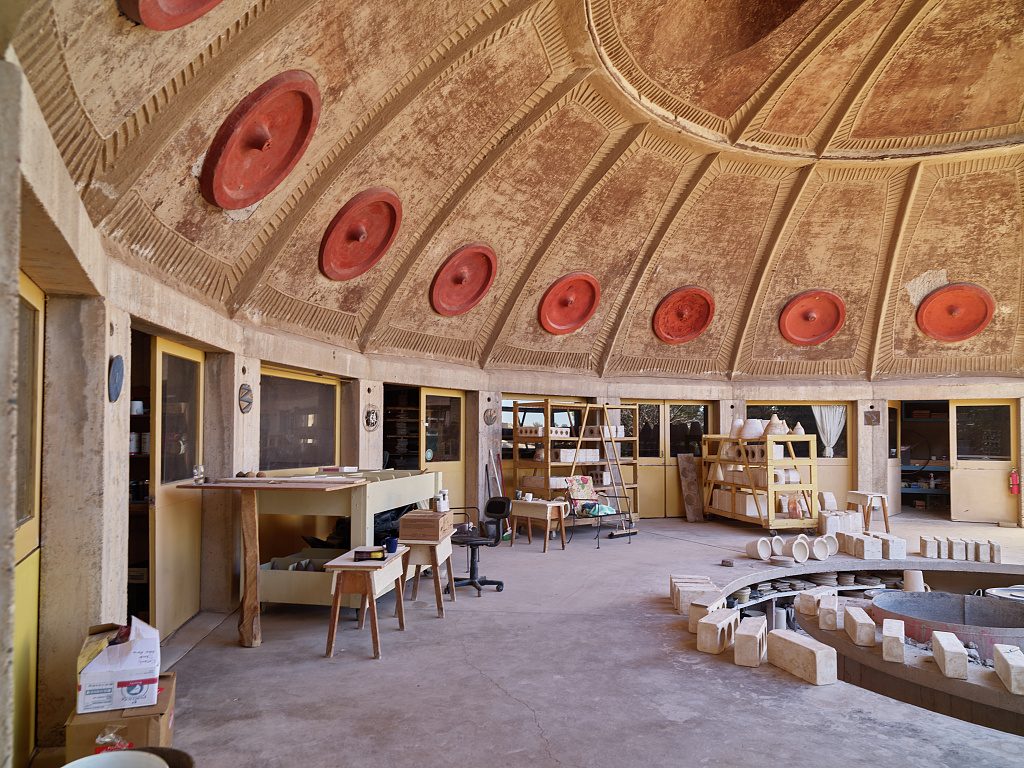
Cosanti Foundation materials and later journalism treat Arcosanti as an ongoing educational prototype and foundry community, not a completed megacity. Population stayed in the low hundreds at most eras of public reporting. That smallness is why Museum placards call it a living test — and why this wiki never writes “Concordia is Arcosanti.”
Fuller, domes, and Old Man River’s City
Buckminster Fuller’s geodesic work includes the Montreal Biosphere (Expo 67) — a real enclosure, later a museum, not a city. His “Old Man River’s City” proposal for East St. Louis imagined a domed settlement on the order of 125,000 people. Treat the Biosphere as structure; treat Old Man River as paper. Photo licenses for Montreal vary; prefer named CC-BY or PD-self files, never Getty.
PD-self example: Biosphere in Montreal.jpg (Susan G. Lesch, 2002).

Biosphere 2 (1991)
Biosphere 2, in Arizona, sealed crews inside a glass ecology. The first mission (1991–1993) is public history: oxygen levels dropped, concrete chemistry and crop choices were argued about, and the crew fractured socially. It is a valuable “what not to do” exhibit for closed habitats. It is not Concordia’s Opening, and it does not explain ASI.
Modern interior photographs are often copyrighted. Do not hotlink editorial tourism shots. A Museum wing can describe the oxygen lesson without a restricted picture.
Public summaries of the first Biosphere 2 mission record an oxygen drop of several percentage points, concrete curing that took oxygen from the sealed air, crop shortfalls, and crew conflict. Those lessons belong in a closed-habitat gallery: chemistry and social trust fail together when the envelope is treated as magic. Concordia’s Opening (2090) is a different event on History — do not narrate Biosphere 2 as a dress rehearsal for Section 0.
McMurdo and analog stations (useful analog, not a definition)
McMurdo Station is a polar logistics base. It houses rotating staff in a lethal climate with shared life-support, workshops, and rec rooms. Use it as an analog for isolation and resupply — not as a definitional arcology, and not as a stand-in for Concordia’s North American geography.
Kowloon Walled City as hyperdensity
Kowloon Walled City was an unplanned, extremely dense stack — not a Soleri project, not a closed ecology, and not a model Concordia endorses. It is useful as a warning about unplanned vertical crowding. Most surviving photographs are copyrighted; skip them unless a license is proven. Never caption it as if Soleri built it.
The Line / NEOM (proposed / incomplete)
The Line is a twenty-first-century megaproject with a public brief (linear form, no cars in the marketing, very large stated population). Construction is contested and incomplete. Date-stamp the claim. Do not write nine million residents as a present fact. Concordia’s public geography remains continental — North America near the U.S.–Canada border — with the exact site unpublished.
How the Museum uses these sites
Highsmith’s Arcosanti photographs and the Biosphere 2 public history belong in a “built experiments” bay of the Museum Archive. Placards should say Earth history / not a depiction of Concordia. Deeper campaign readings stay in Story Mode.