Wiki · Arcology history
Wiki Arcology history · 2490 scholarship
Earth history of arcologies
Before Concordia had a door, the idea already had a century of drawings. This page is Earth history, kept in 2490 as Museum / Zoggoling scholarship — not a map of Arcology One.
Shared Earth, before Opening
This page is Earth history for 2490 Museum / Zoggoling readers. Concordia’s dated civic story from 2058 lives on History.
On Earth the word arcology is young — coined in 1969 by the architect Paolo Soleri — but the wish is older: put a city’s living, working, growing, and wasting into one compact body so the land around it can breathe. Crystal Palace, Otis, Bessemer, Arcosanti, and Biosphere 2 already happened, and they are true here. How Concordia itself opened, failed, and continued is told on History — beginning where fiction authorship begins, in 2058.
Paper cities
Phalanstère · Niagara halls · Roadtown · Città Nuova · Ferriss, 1829–1929.
Machines
Bessemer steel, Otis’s safety brake, HVAC, and plate glass.
Prototypes
Arcosanti, Biosphere 2, analog stations — built experiments that stayed small.
In culture
How novels, comics, and games used the megastructure — published fiction and games, not Concordia’s origin.
Image credits
Hosted public-domain plate index. No Getty embeds.
What does the word mean on Earth?
An arcology is a compact mixed-use megastructure: architecture fused with ecology. The Oxford English Dictionary’s earliest evidence for the word is 1969, in the writing of Paolo Soleri — a portmanteau of architecture and ecology. The hope is older than the coinage: put living, working, growing, and wasting into one body so the land around it can recover.
That definition is true in 2490 Concordia the same way it was true in 1969 Phoenix-area lectures. It is not a brand of Section 0, and it is not a claim that Concordia is Arcosanti. Short definition: Glossary · arcology (word).
What laws still hold?
Mathematics, physics, and engineering did not reset at Opening. Miniaturization, steel skeletons, elevator safety, closed-loop ecology, and stack-effect climate still govern why a city under one roof can stand. Play names space in its own vocabulary — microcell, block, plate, elevator-as-room — on Rooms, floors & maps. Those play terms sit on top of this physics. They do not replace it.
- Miniaturization — compact the city’s organs until private cars are unnecessary; pedestrians, lifts, and shared transit do the rest.
- Steel skeletons — load travels through a frame. Bessemer’s inexpensive steel (1856) is why height is not a thickening brick fortress.
- Elevator safety — Otis, 1854: the rope can break and the car still holds. In play an elevator is still a room with a URL.
- Closed loops — air, water, harvest, and reclaim have to balance inside an envelope. See Reclaimer for the civic word Concordia uses.
- Stack effect — heat rises. Envelopes that ignore it fail as habitat; Soleri’s hollow cores and later climate decks are arguments with that fact.
Who coined it?
Soleri argued that cities should behave more like organisms than like grids of lots. In Arcology: The City in the Image of Man (MIT Press, 1969) he pressed miniaturization as civic ethics, not only as a drawing style. Pedestrian movement, lifts, and shared transit replace the private car; the landscape around the compact body is supposed to heal.
He did not found Concordia. Ari Odelo is the in-world founder. When she made the civic case around 2058, she was joining a conversation Soleri had already named — she was not becoming him. See Glossary · Paolo Soleri.
What was drawn, 1829–1929?
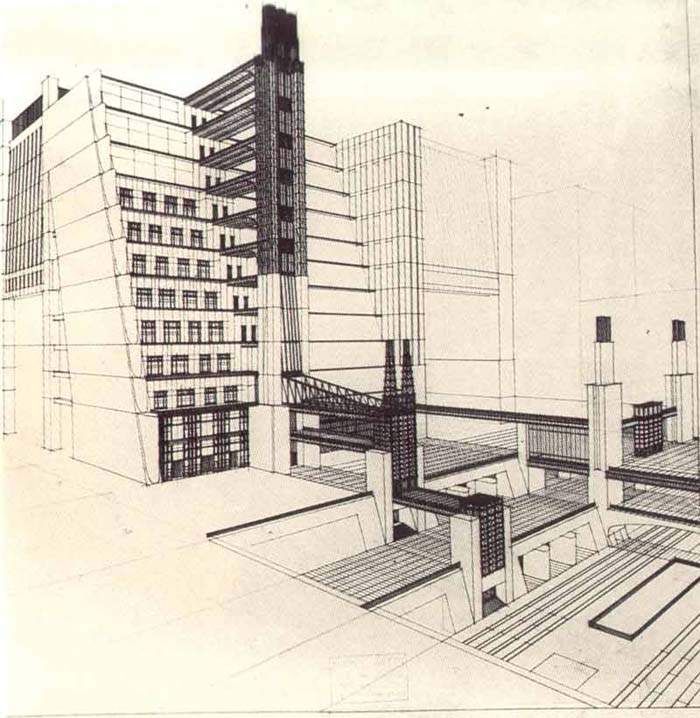
Before the word existed, drawers kept proposing one structure that would hold a whole social world. Fourier’s Phalanstère imagined a closed social palace with glass arcades. King Camp Gillette’s The Human Drift (1894) stacked hexagonal halls beside Niagara. Edgar Chambless’s Roadtown (1910) ran a city along a silent railway. Antonio Sant’Elia’s Città Nuova drawings (1914) made external lifts and skybridges look inevitable. Hugh Ferriss’s The Metropolis of Tomorrow (1929) turned setback law into charcoal ziggurats.
These plates are the same Earth’s paper record. The Museum hangs them as ancestor drawings, not as recovered floorplans of Section 0. Full notes: Paper cities.
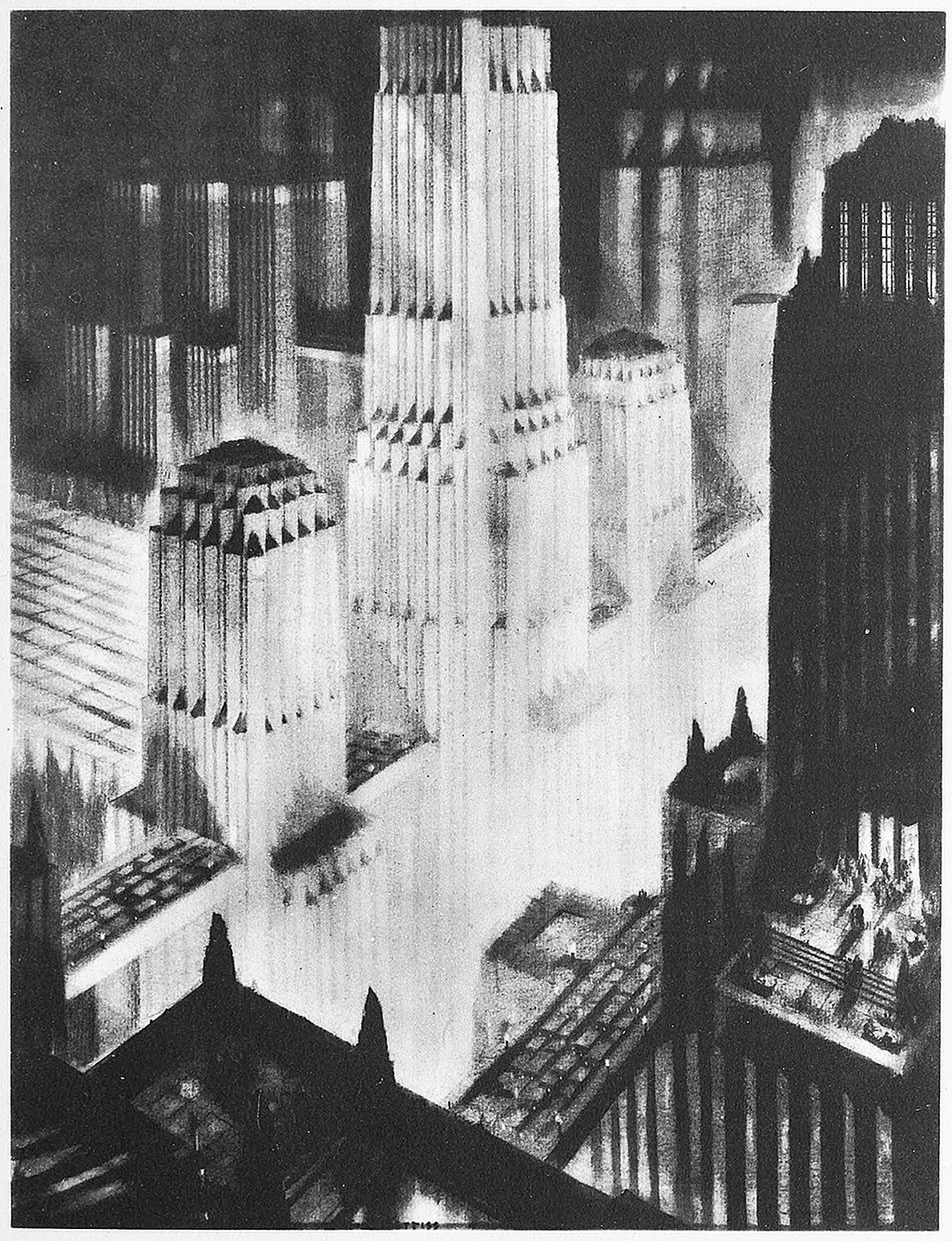
mettomo00ferr. Earth history — not a depiction of Concordia.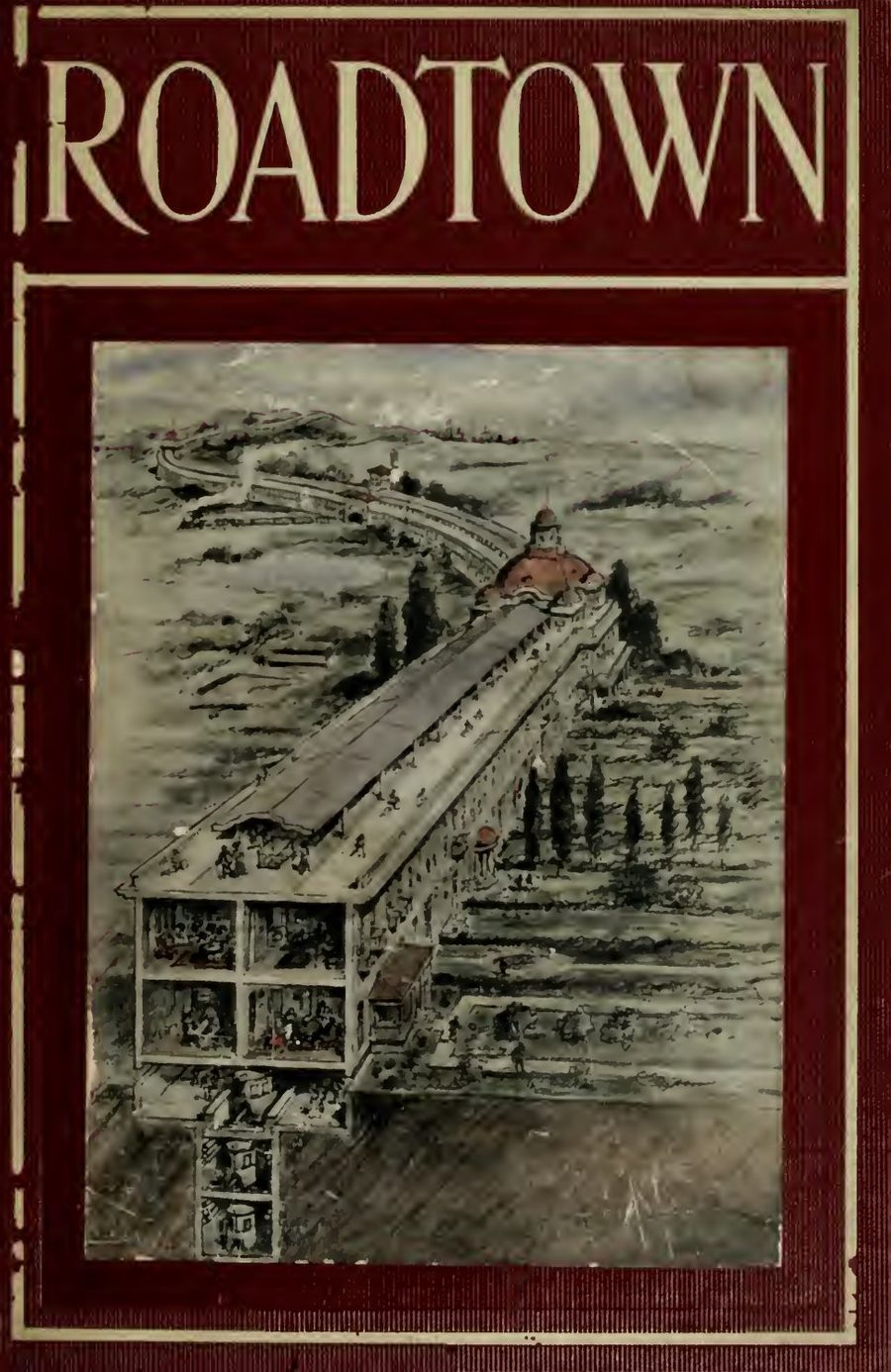
What machines made height livable?
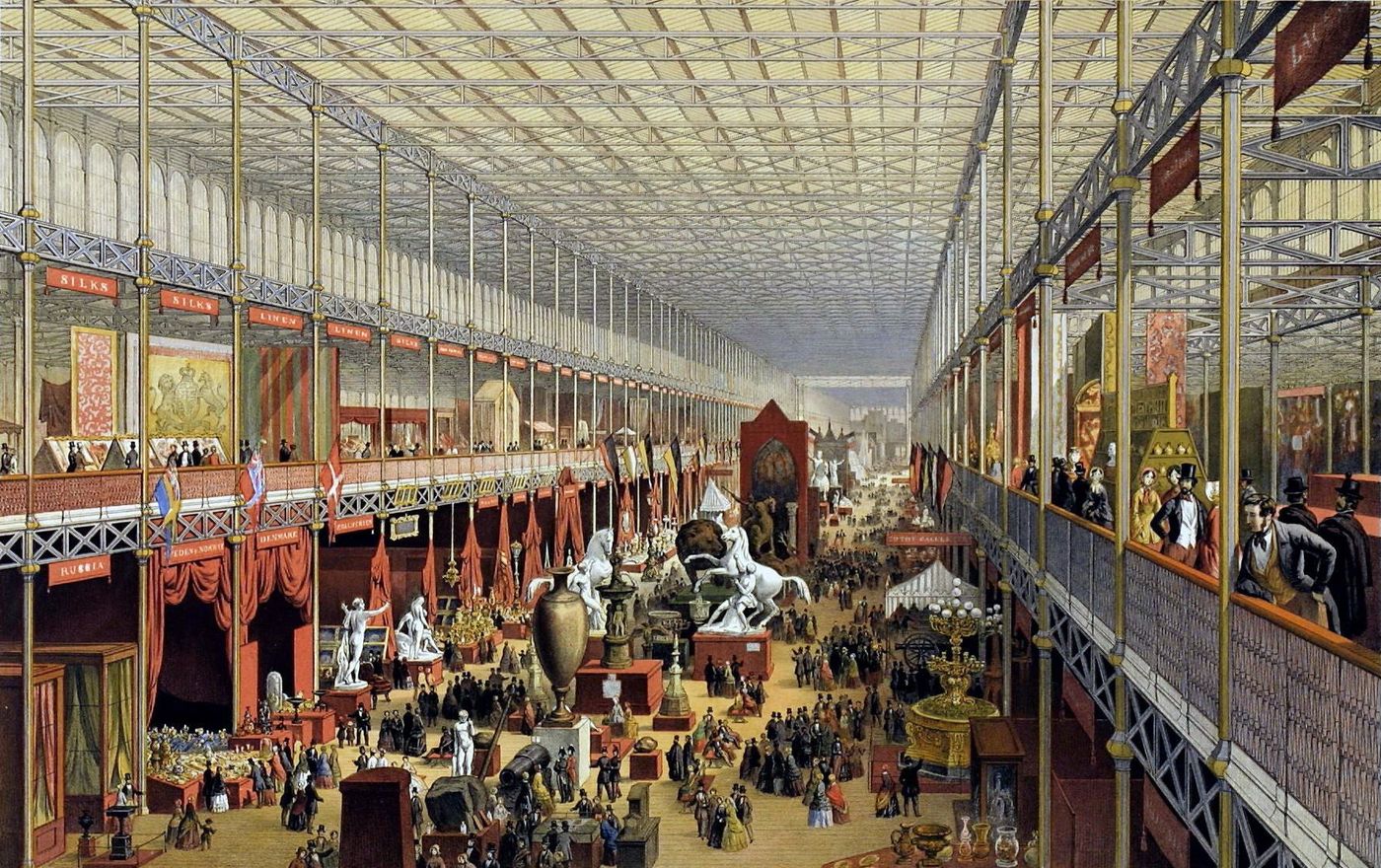
Drawings needed cheap steel, a lift that would not kill its passengers, air that could be moved through an envelope, and glass large enough to admit daylight. Henry Bessemer’s inexpensive steel process (patented 1856), Elisha Otis’s safety-brake demonstration at the New York Crystal Palace (1854), Willis Carrier’s modern air conditioning (1902), and cast plate glass still sit under every tall Concordia shaft. Full notes: Machines.

What was built?
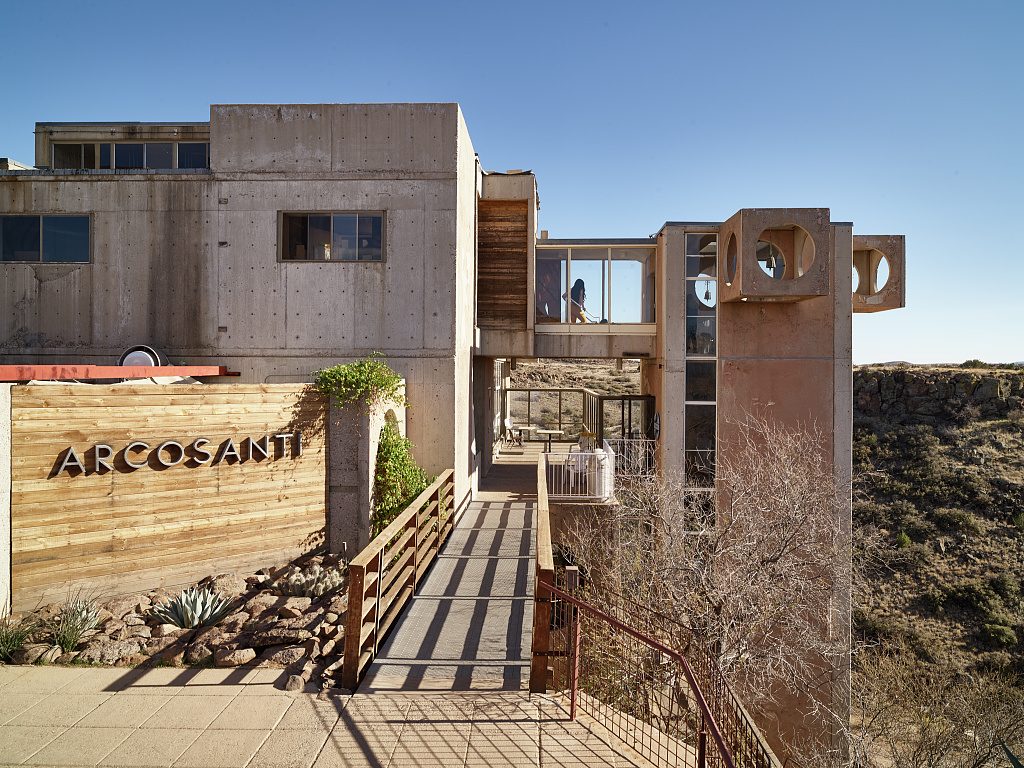
Arcosanti, begun in the Arizona desert in 1970, remains Soleri’s living prototype — silt-cast apses, a bronze foundry, a town that never reached the city-scale population the drawings implied. Biosphere 2 (Arizona, 1991) sealed a crew inside a glass ecology and then published its oxygen drop and social fracture. Buckminster Fuller’s Montreal Biosphere (Expo 67) and the unbuilt “Old Man River’s City” proposal belong here as Earth structures and paper, not as Concordia wings.
McMurdo Station is a polar logistics base. It is a useful analog for isolation and life-support — not a definition of an arcology. Full notes: Prototypes.
What is fiction?
Earth audiences often met the word in stories, not in building codes. Larry Niven and Jerry Pournelle’s Oath of Fealty (1981) put Todos Santos over a burnt slice of Los Angeles. William Gibson’s Neuromancer (1984) let corporations occupy self-contained piles. Judge Dredd’s Mega-Blocks and later games such as The Ascent treated vertical cities as a setting, not a civic proposal.
Those works are cultural history. Arcology Project is not set in any of those universes. Full notes: In culture.
What did the twenty-first century attempt? (proposed / incomplete)
By the 2020s, compact fusion reactors, perovskite windows, piezoelectric floors, and carbon-nanotube skeletons appeared in planning sketches and press copy. Treat those as conditional engineering, not invoices. Cost packs that quote hundreds of billions of dollars for a closed-loop city are planning numbers, not Concordia’s ledgers, and they do not belong on History.
The Line / NEOM is a contemporary megaproject with a public design brief and a contested, incomplete construction record. Date-stamp any mention. Do not write as if nine million people already live there. It is an attempt, not a finished arcology, and it is not a map of Concordia.
Off-world cousins
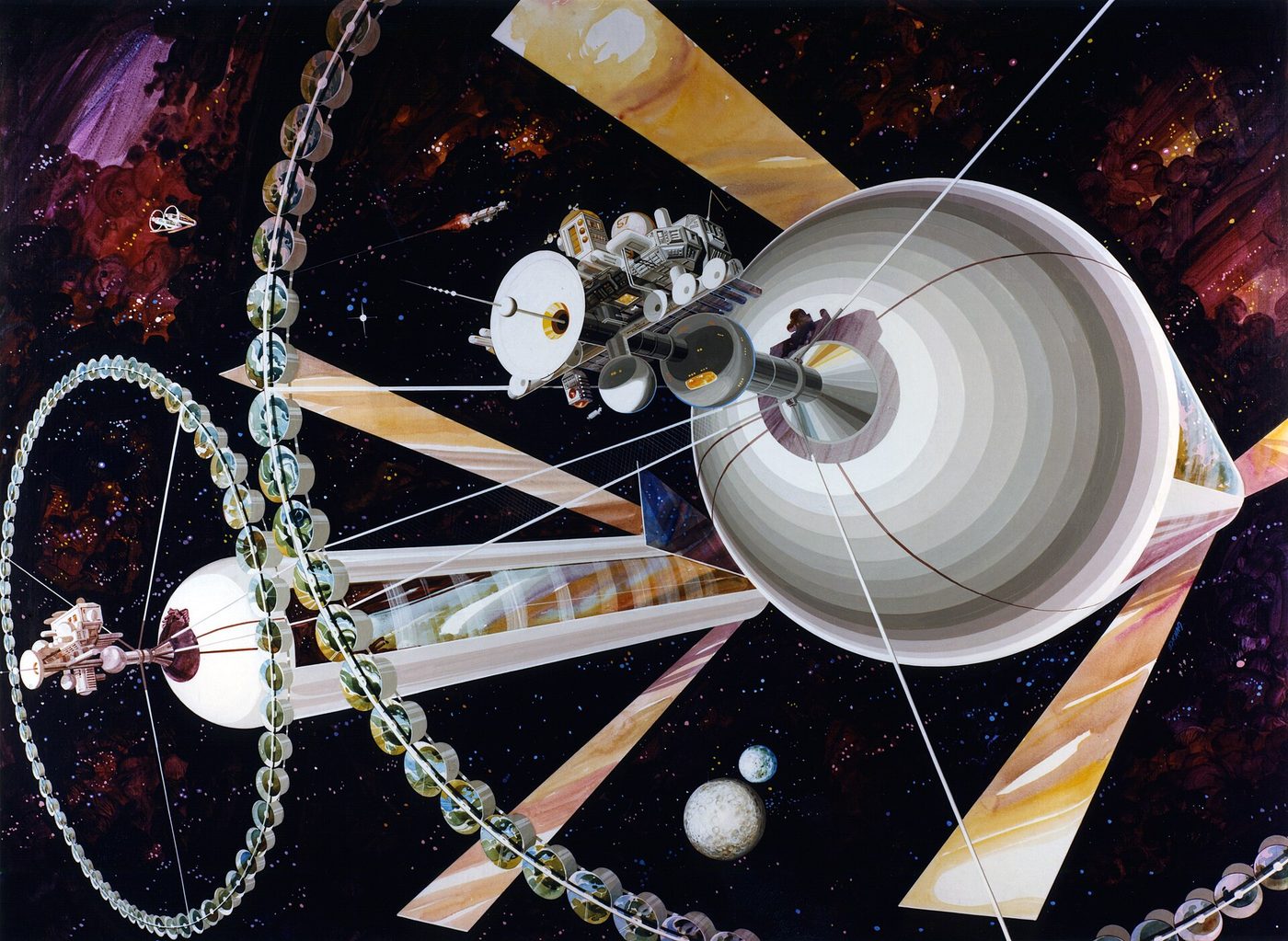
Gerard K. O’Neill’s cylindrical habitats (1970s) and the NASA Ames art programs that pictured them are the cleanest Earth answer to “could an arcology be a ship?” Yes as a habitat that never lands. No as a city that takes off and touches down. A city-sized rigid megastructure cannot be flown through an atmosphere; the rocket equation and the structural contradiction are ordinary physics, not lore.

How Concordia remembers this material
The Museum Archive hangs ancestor drawings and built-experiment photographs. Terminals open this catalog. Placards can be short and in-world: a Chambless plate captioned as a city that wanted to be a line, Earth, before Opening. Docents treat Ferriss charcoal as curriculum, not as a floor of Section 0. Zoggoling’s scholarship keeps the Earth record readable without collapsing it into Opening Day.
Museum Archive · sample placard voice
The city that wanted to be a line. Chambless, 1910. Earth, before Opening. Not a map of Concordia.
A resident in 2490 can argue with a docent about whether Ari Odelo had Ferriss on her table. The plate is real. The conversation is lore. Public pages do not pick a winner.
Atmosphere and Concordia’s own story continue on Lore. Play remains spoiler-free here.
Sources
- Soleri, Paolo. Arcology: The City in the Image of Man. MIT Press, 1969.
- Ferriss, Hugh. The Metropolis of Tomorrow. 1929. Public domain in the United States. Wikisource.
- Chambless, Edgar. Roadtown. New York: Roadtown Press, 1910. Internet Archive.
- Gillette, King Camp. The Human Drift. 1894. Internet Archive.
- Sant’Elia, Antonio. La Città Nuova drawings, 1914.
- Library of Congress, Carol M. Highsmith Archive — Arcosanti photographs (no known restrictions). Hosted plate: LC-DIG-highsm-49768. Interior apse: LC-DIG-highsm-49769.
- NASA Ames Research Center space-settlement art, mid-1970s.
- Image credit index: Images. Do not treat Getty / MPI / Tony Korody / SCMP / DEA plates as free to reuse. The Gemini notebook is not authority.